Forecasting The Northern Lights in Scotland
How to Forecast the Northern Lights in Scotland
Forecasting the Northern Lights in Scotland involves much more than simply checking whether auroral activity is expected. While the strength of the aurora is important, successful viewing also depends on darkness, weather, location and moon phase.
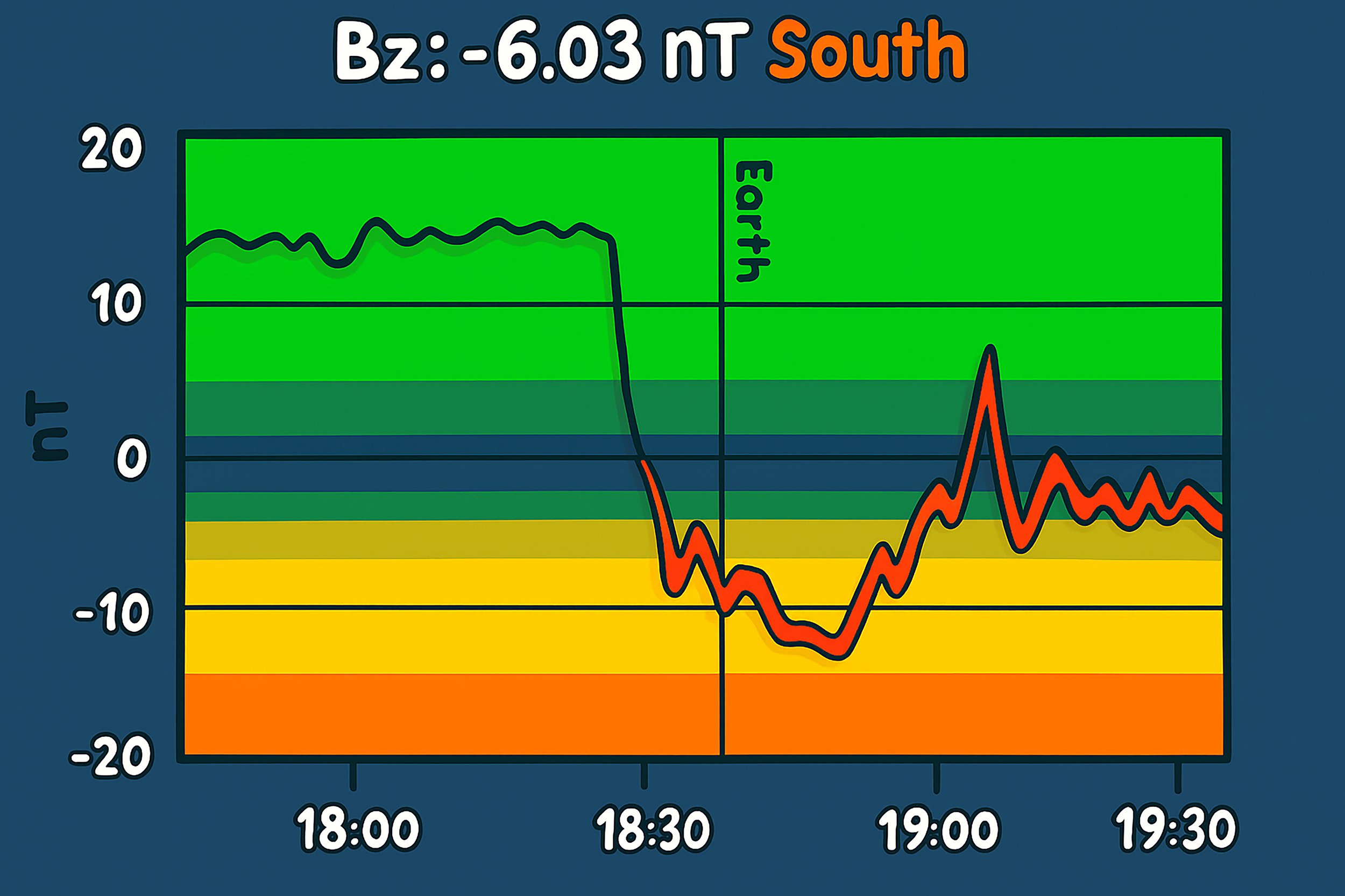
Experienced aurora hunters closely monitor real-time solar wind data. Key measurements include solar wind speed, density, and the orientation of the Interplanetary Magnetic Field (IMF). Of particular importance is the Bz component. When the Bz turns negative (southward), it allows solar particles to more easily interact with Earth's magnetic field, often leading to stronger auroral displays. A sustained negative Bz combined with elevated solar wind speeds above 500 km/s can increase the likelihood of visible aurora here in Scotland.
See link to see Live Space Weather
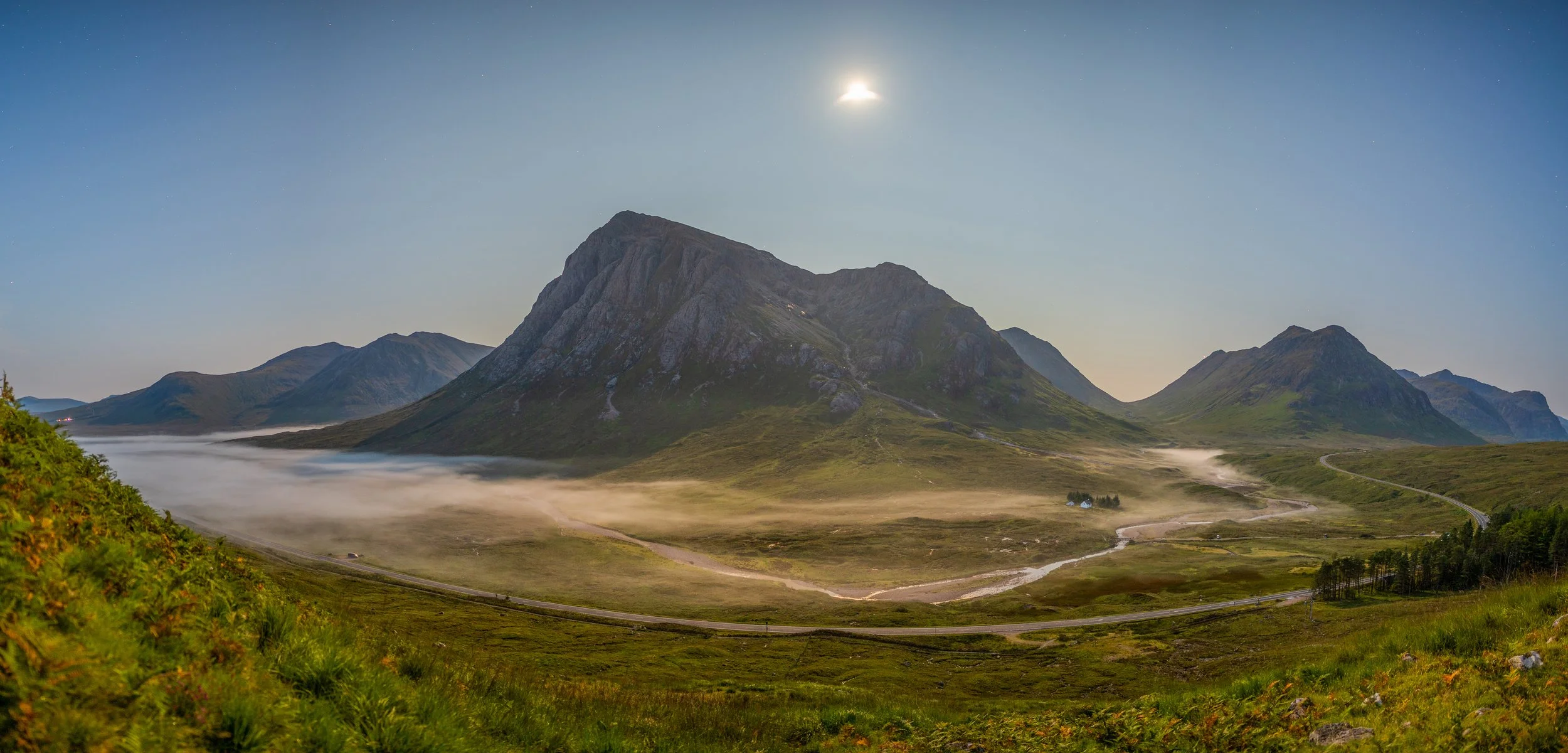
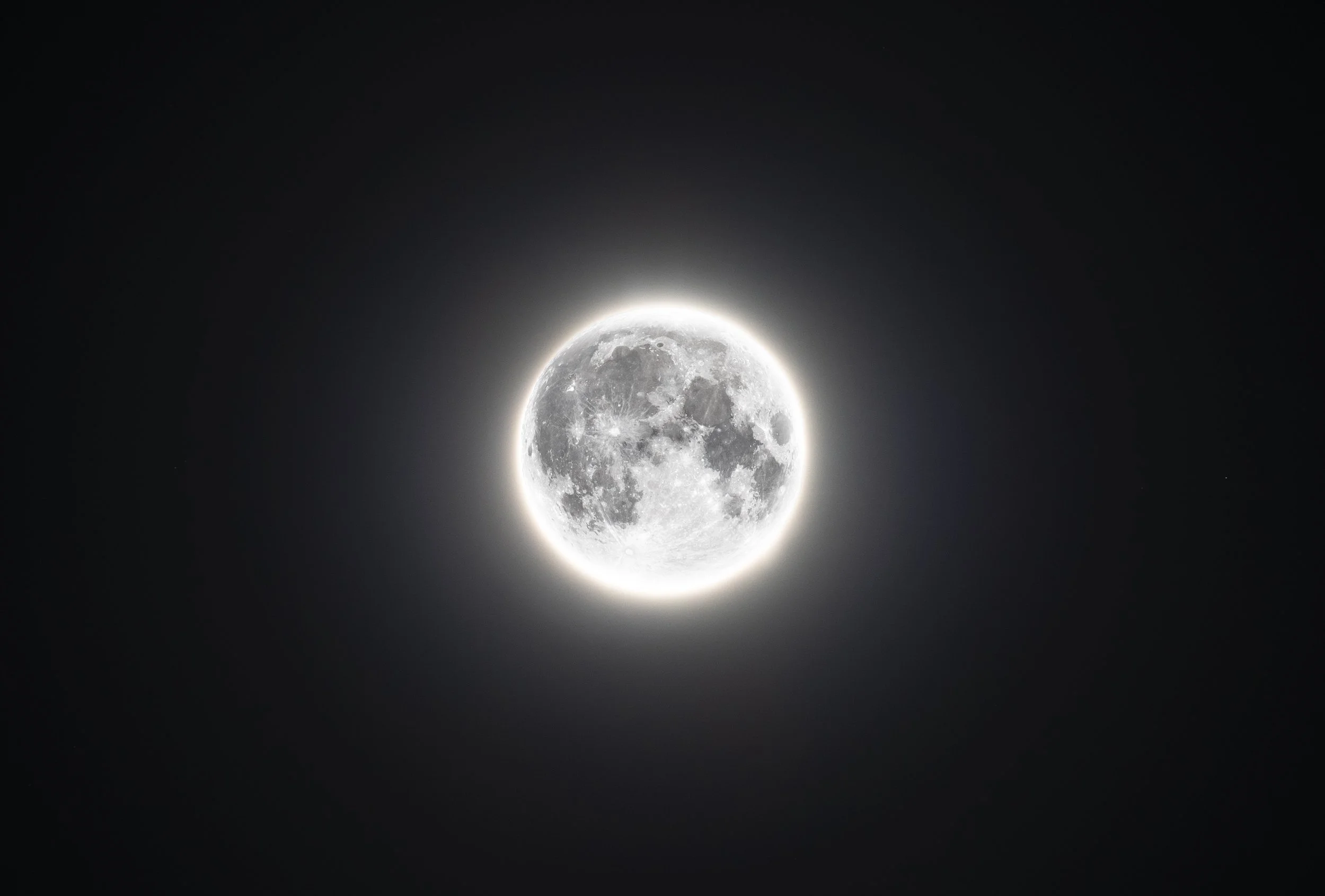
Moon Phase and Astronomical Darkness
When chasing the Northern Lights, the phase of the Moon and the amount of astronomical darkness are just as important as auroral activity itself. A bright Moon, particularly around the Full Moon phase, can significantly brighten the night sky and wash out weaker auroral displays, making them difficult to see with the naked eye. For the best viewing conditions, many aurora chasers prefer nights around the New Moon when skies are naturally darker and even faint auroral structures become more visible.
Astronomical darkness refers to the period when the Sun is more than 18 degrees below the horizon, creating the darkest possible skies. In Scotland, this darkness is abundant during autumn, winter, and early spring. During summer, however, Scotland experiences very short nights and in northern areas the sky never reaches true darkness. This endless twilight makes even strong auroral displays difficult or impossible to see, making the prime Northern Lights season generally run from September through March.
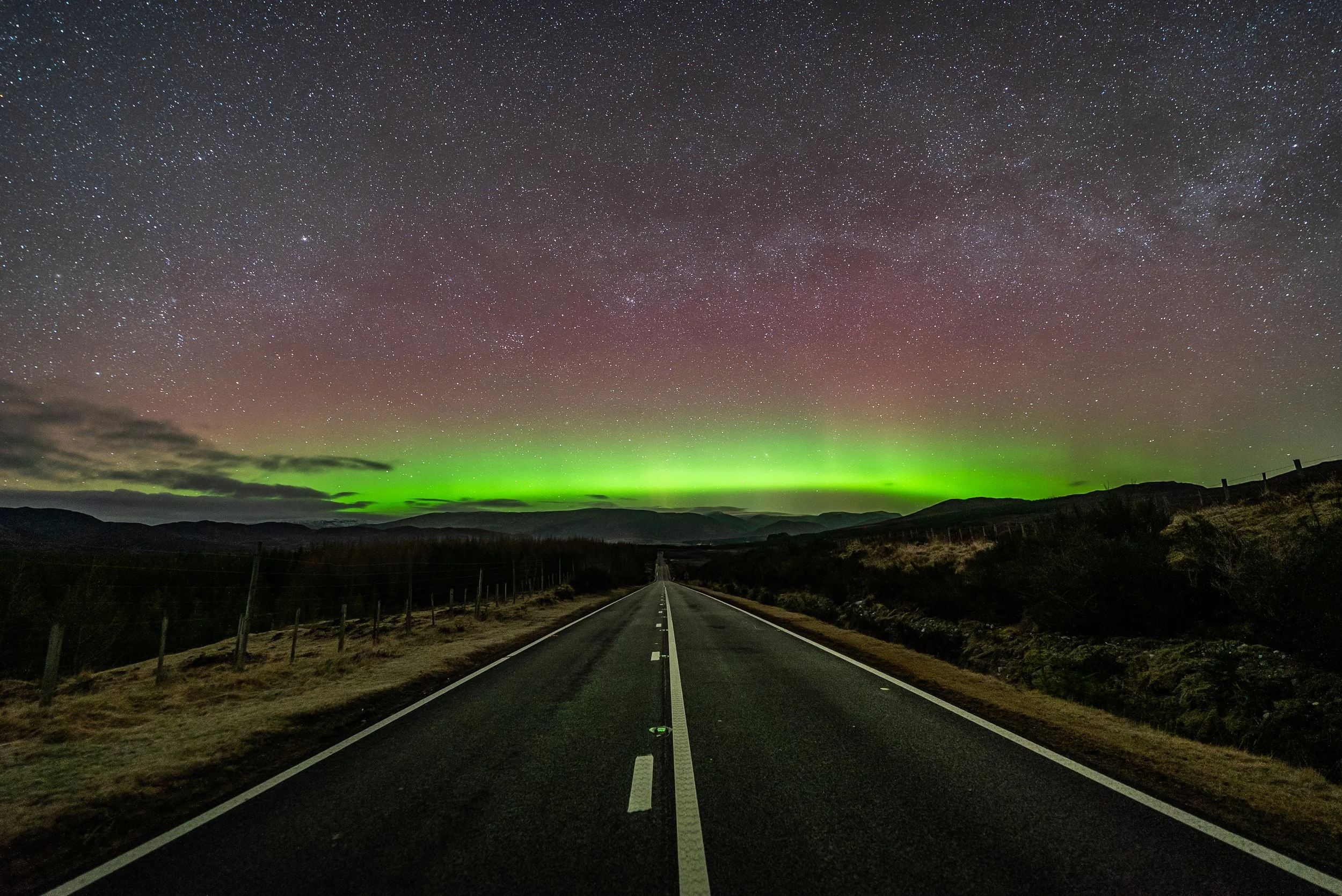
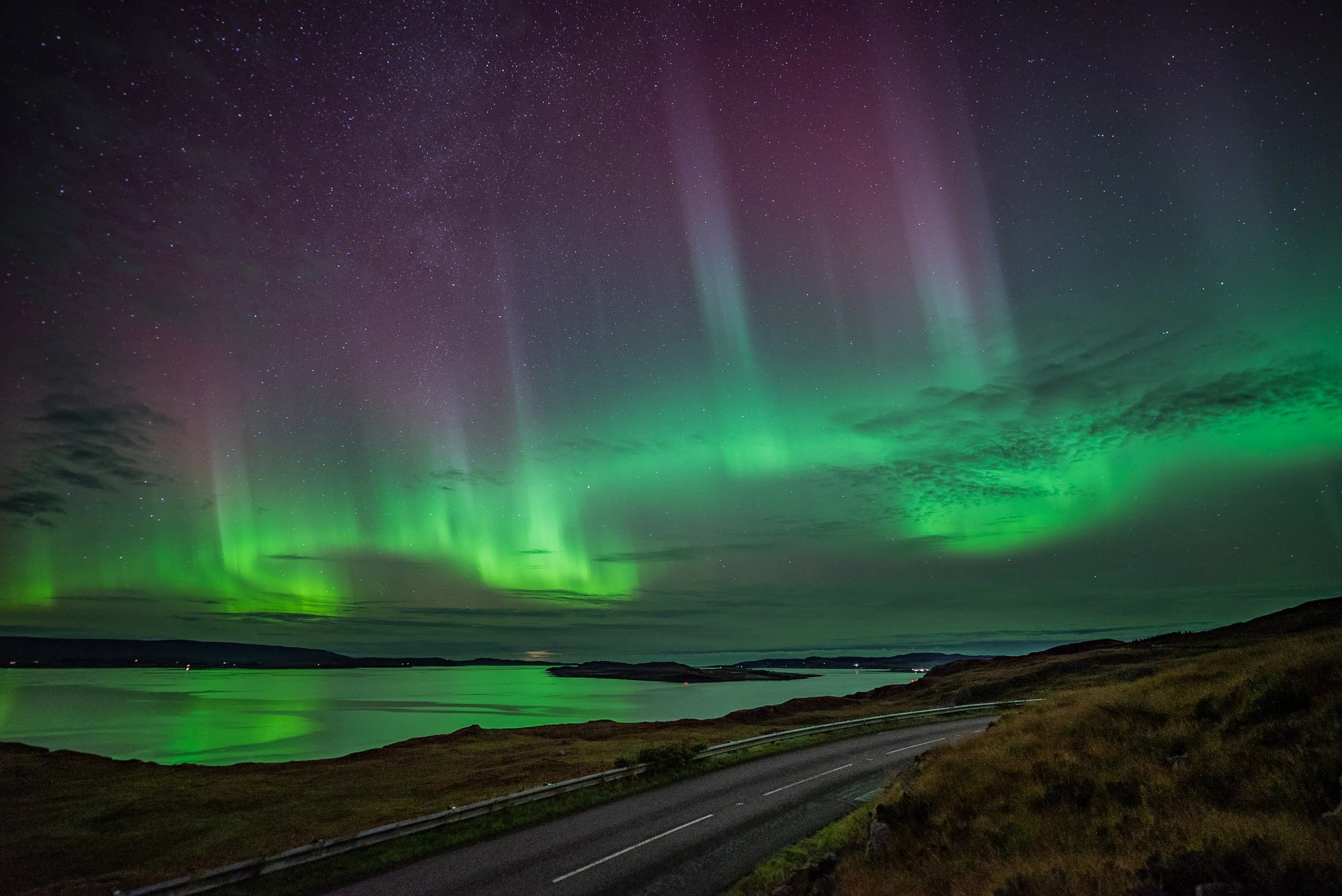
Looking North and Monitoring Real-Time Activity
When searching for the Northern Lights, always choose a location with a clear, unobstructed view of the northern horizon, as this is where auroral activity is most commonly first seen from Scotland. Coastal viewpoints, hilltops, and open landscapes often provide the best opportunities.
It's also worth keeping an eye on live aurora webcams (linked Below) as they can provide real-time view if the lights are active. Joining local aurora Facebook groups can be great too with members frequently sharing live sightings, photographs, and location updates throughout the night.
Facebook Groups = Aurora Hunters UK / Aurora Research Scotland
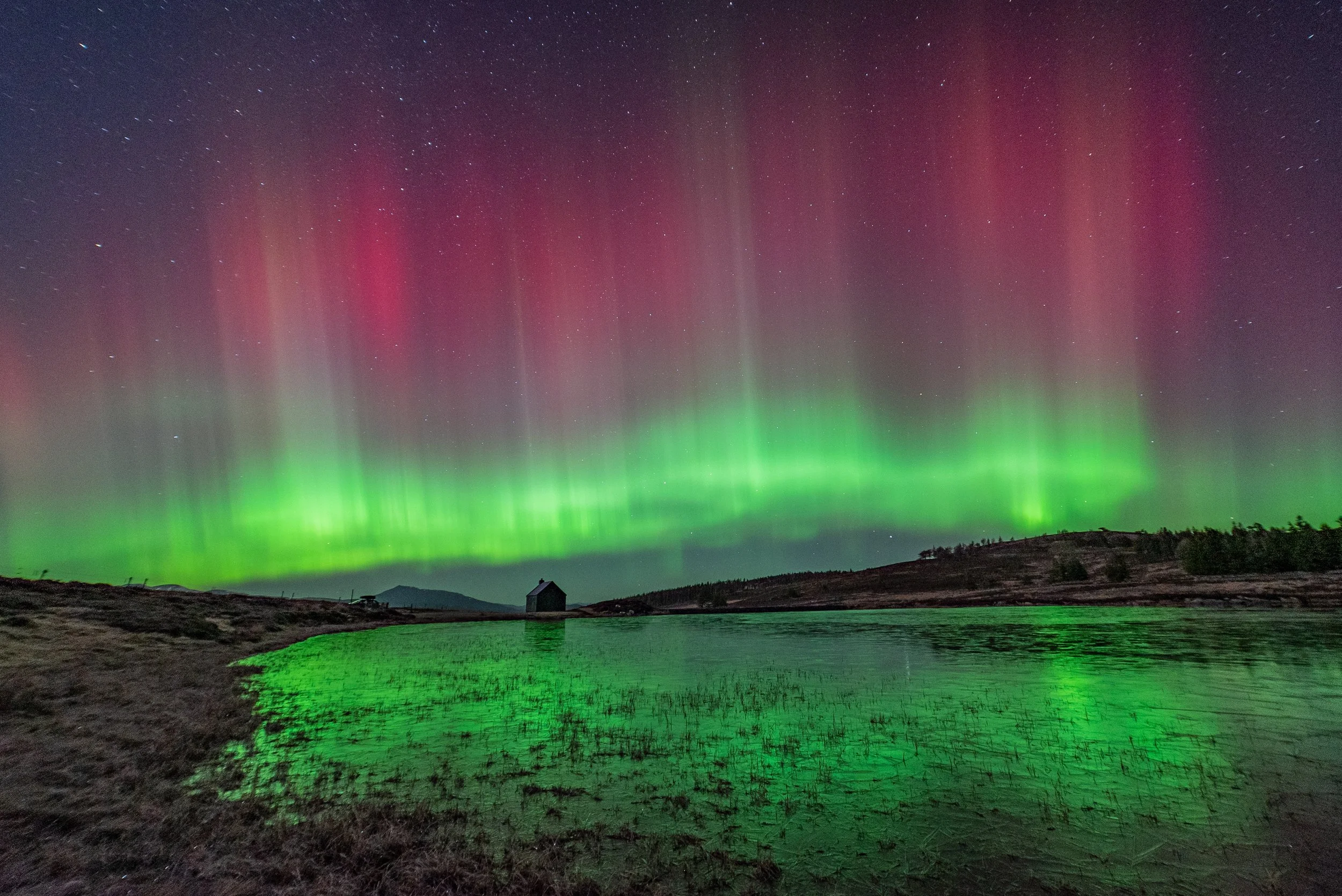
My Top Tips
🟢 Use a reliable Aurora forecast to monitor geomagnetic activity
🟢 Check the weather forecast and choose a location with clear skies
🟢 Visit a dark sky location away from towns and city light pollution
🟢 Choose a night with little or no moonlight for the darkest possible skies
🟢 Look towards the northern horizon, where the aurora is most visible
🟢 Be patient – displays can appear and disappear throughout the night
🟢 Use your camera – the aurora often appears brighter and more colourful in photos than to the naked eye
🟢 Use a sturdy tripod to keep your camera completely still during long exposures
🟢 Shoot in RAW format for the highest image quality and easier editing
🟢 Use a wide-angle lens with a fast aperture (f/2.8 or wider if possible)
🟢 Focus manually on a bright star before the aurora appears
🟢 Carry spare batteries, as cold temperatures drain them quickly
🟢 Stay up to date using live webcams and Facebook groups
🟢 Enjoy the experience — Take time to appreciate the display with your own eyes.